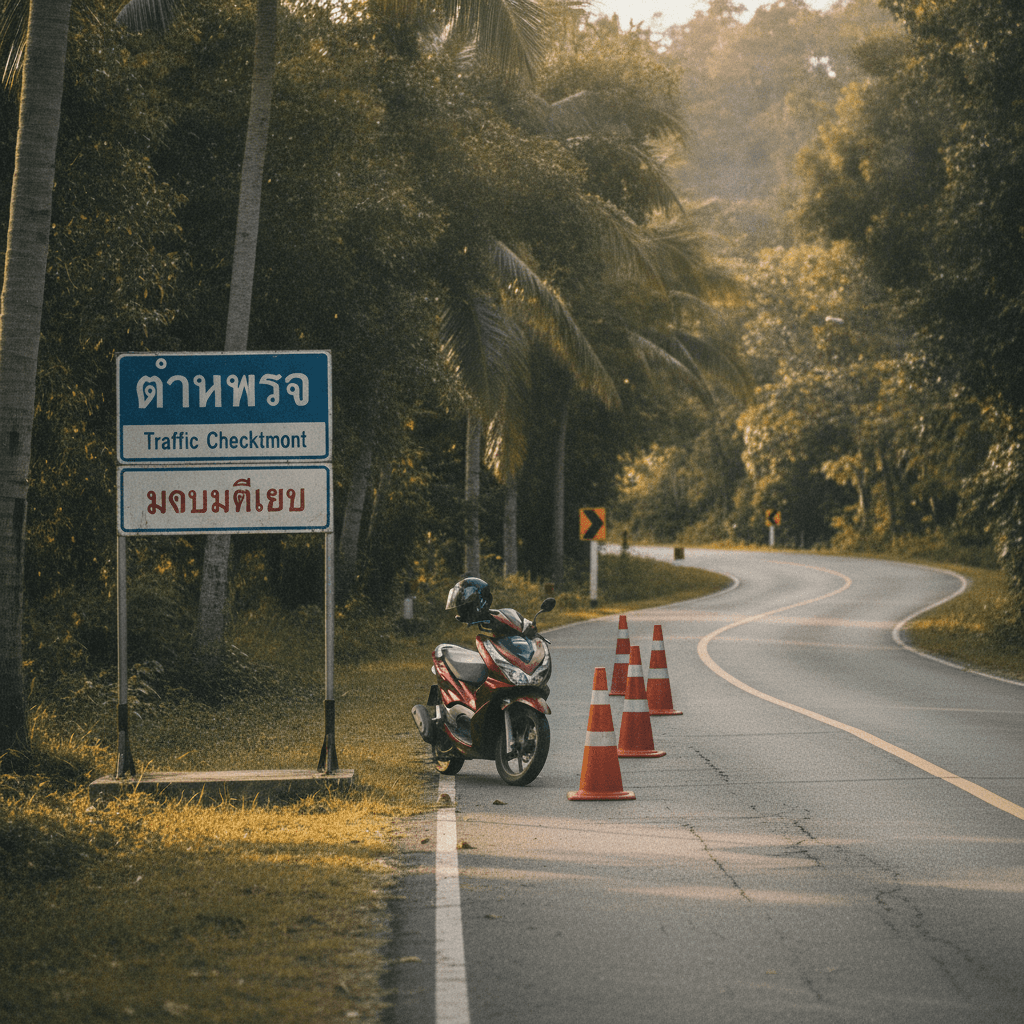
A police checkpoint on a Phuket road can feel intimidating if you don't know what to expect, but for riders who come prepared, it's usually a short, routine stop. Traffic police on the island check documents and safety equipment daily, especially in tourist areas and after dark, and most interactions end quickly once you show a valid license, a helmet, and your rental paperwork. This guide walks through exactly what checkpoints look like, what officers check, how to prepare, and what to do if you're stopped — so you can ride with confidence instead of anxiety.
Why Police Checkpoints Happen in Phuket
Phuket's traffic police run regular checkpoints across the island, with a noticeable concentration near popular tourist zones such as Patong, Karon, Kata, and the roads connecting Bangtao and Chalong to the main highways. Checkpoints also become more common after dark, when visibility drops and road safety enforcement increases. These stops are not unique to tourists — Thai residents are checked at the same checkpoints — but foreign riders are more likely to be flagged simply because rental bikes are easy to spot and licensing requirements for visitors differ from those for Thai nationals.
The purpose of these checkpoints is straightforward: police are verifying that riders on the road are legally licensed, wearing the required safety gear, and operating a vehicle that is properly registered and insured. Understanding this purpose helps put the experience in context — it's a standard road safety measure, not something to be alarmed by if your paperwork is in order.
Documents to Carry Every Time You Ride
Before you leave any Chang Thai Rentals location — Phuket Airport, Bangtao, Chalong, Phuket Town, or Mai Khao — make sure you have the following with you on the bike, not left behind in your hotel room:
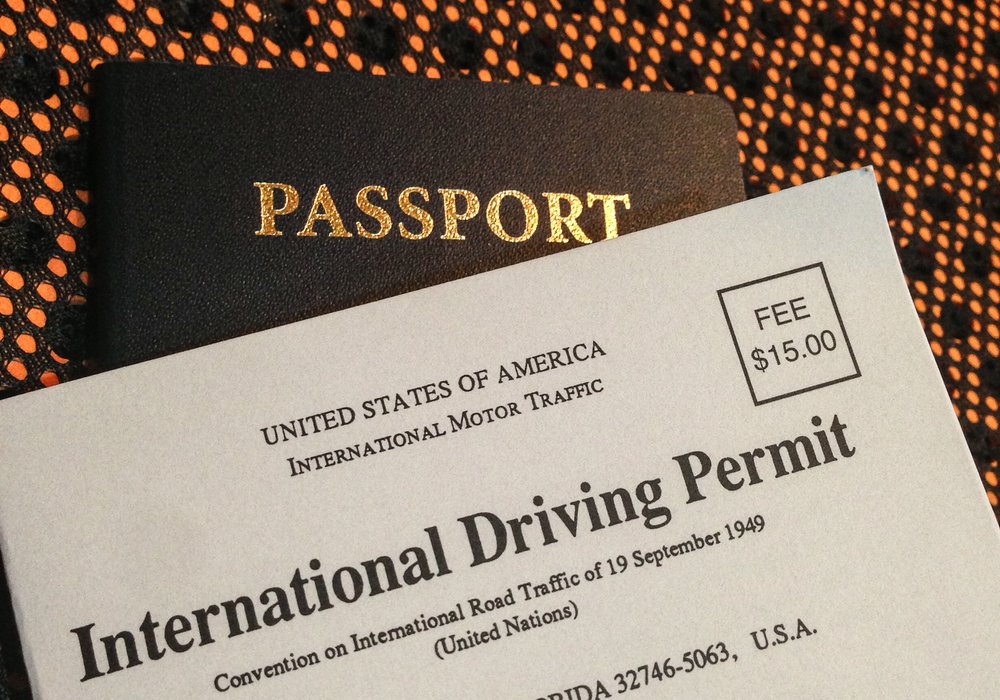
- A valid motorcycle license or International Driving Permit (IDP) with motorcycle category. This is the single most important document. A car-only license or a general IDP without the motorcycle category does not satisfy the legal requirement for riding a motorbike in Thailand.
- Your passport or a clear copy of it. Officers may ask to confirm your identity alongside your license.
- The vehicle registration and insurance document provided with your rental. Chang Thai Rentals supplies this paperwork with every bike, and it should stay with the vehicle at all times.
- A helmet — for both rider and passenger. Helmets must be worn, not just carried, whenever the bike is in motion.
If you haven't yet sorted out your license situation, our detailed guide on whether you need a license to ride a bike in Thailand explains exactly what's required for foreign riders before you even collect your rental.
Step-by-Step: What Happens When You're Stopped
Knowing the sequence of a typical checkpoint stop removes most of the uncertainty. Here's what to expect:
1. Slowing Down and Pulling Over
Officers will typically signal riders to slow down and move to the side of the road where the checkpoint is set up. Approach at a reasonable speed, indicate you've seen the signal, and pull over safely without cutting across traffic.
2. Turning Off the Engine and Removing Your Helmet
Switch off the engine, put down the kickstand, and remove your helmet so the officer can see your face clearly. This is standard procedure and signals cooperation from the start.
3. Presenting Documents
The officer will usually ask for your license or IDP first, followed by the vehicle's registration and insurance document. Hand these over calmly. If your license is in a wallet or bag, take a moment to retrieve it rather than fumbling — there's no need to rush.
4. Vehicle and Safety Check
Officers may glance at the bike's condition, check that the registration plate matches the documents, and confirm both rider and passenger were wearing helmets during the stop.
5. Outcome of the Stop
If everything is in order, you'll be handed your documents back and waved on — this is by far the most common outcome for riders with a valid IDP, helmet, and rental paperwork. If an issue is found, such as an invalid license, the officer will explain the violation and the process for addressing it.
The Most Common Issue Tourists Face: Riding Without a Valid IDP
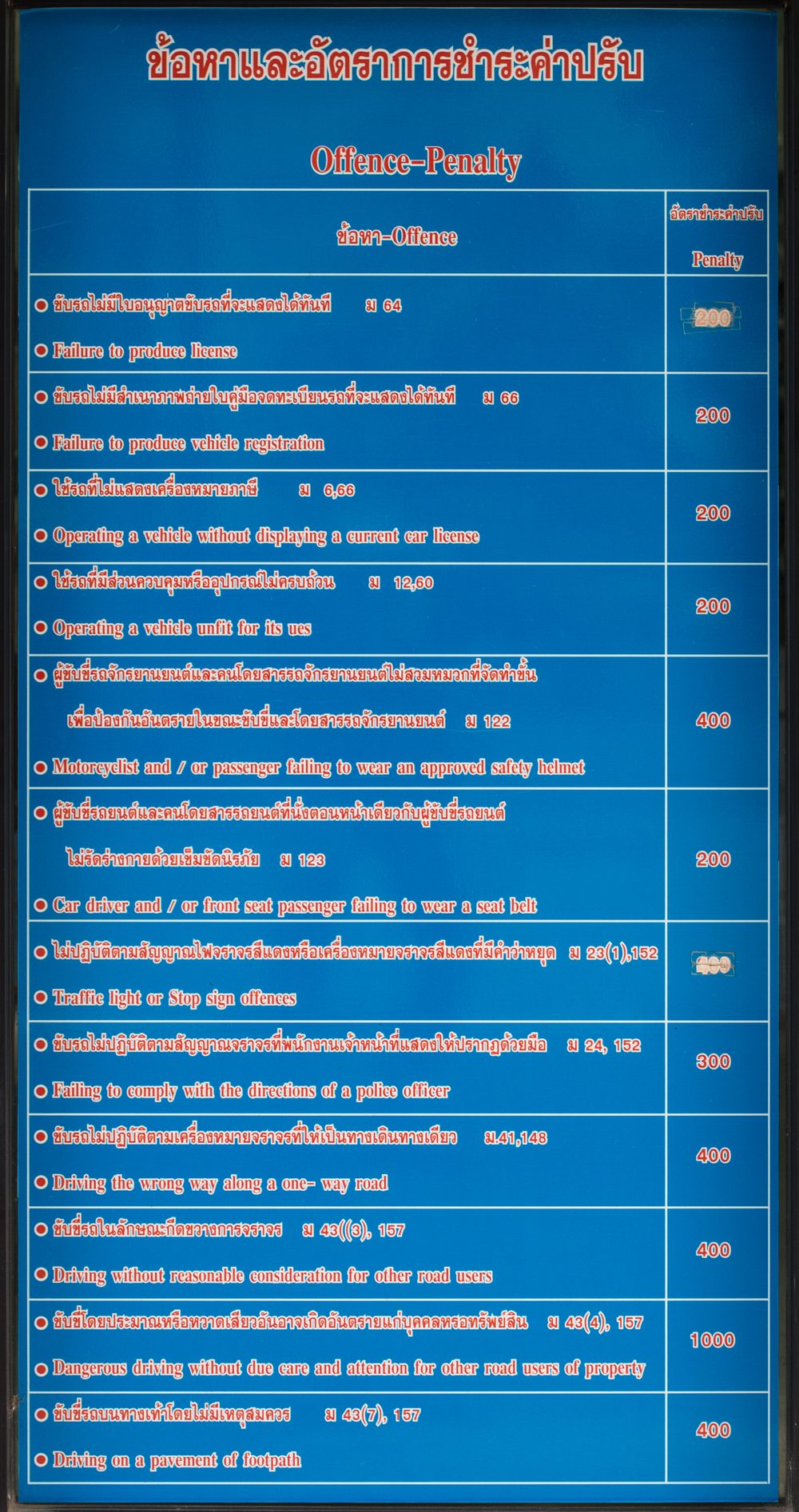
By far the most frequent problem foreign riders encounter at checkpoints is not having a valid IDP with the motorcycle category, or holding only a license that doesn't cover motorbikes. On-the-spot fines for this typically run ฿500–1,000 — but the fine itself is the smaller risk. Riding without a valid motorcycle license or IDP is the single most common reason travel insurance companies reject a claim after an accident, which matters far more than the checkpoint fine if something actually goes wrong. The good news is that this issue is entirely preventable: foreign riders need either a Thai Category A license or an International Driving Permit that specifically includes the motorcycle category. A standard IDP issued for car driving alone does not cover this requirement.
Before your trip, check your home country's IDP to confirm it lists motorcycles, or consider Thailand's licensing options if you plan to ride regularly. Our article on license and IDP requirements for riding in Thailand covers this in detail, including how the category requirement is assessed at checkpoints.
Prevention: Reducing Your Chances of a Fine
Most fines are avoidable with a small amount of preparation before you ever start the engine:
- Confirm your IDP covers motorcycles before you arrive in Thailand. This is not something that can be fixed once you're already on the road.
- Wear your helmet at all times, including for short trips. Checkpoints and general patrols check this consistently, and passengers must wear one too.
- Keep your rental's registration and insurance document on the bike. Chang Thai Rentals provides this with every rental — store it somewhere accessible, such as the under-seat storage or a document pouch, rather than in your bag.
- Follow basic road rules — correct lane use, indicating turns, and respecting speed limits reduce the chance of being stopped for a moving violation rather than a routine document check. Our guide to road safety in Phuket covers practical riding habits for the island's traffic conditions.
- Understand what your insurance covers. Every Chang Thai Rentals bike includes Thai government compulsory insurance, and knowing what it covers gives you peace of mind in case of an incident. See our full breakdown in the motorbike insurance guide.
General Advice for Any Police Interaction in Thailand
The advice for interacting with police in Thailand is the same practical advice that applies anywhere in the world:
- Stay calm. A checkpoint stop is routine for the officers involved; treating it as a normal, brief interaction helps keep things smooth.
- Be polite. A respectful tone goes a long way, even if there's a language barrier — a smile and cooperative body language communicate a lot.
- Pull over safely. Don't stop abruptly or in a way that creates a hazard for other traffic; find a safe spot even if it means continuing a few more meters.
- Have your documents ready and accessible. Fumbling through multiple bags looking for your license adds unnecessary time and stress to the stop.
- Ask for an official receipt for any fine paid. This is standard practice and a reasonable request in any country — a receipt confirms the payment was processed correctly.
If You Disagree With a Fine
If you believe a fine has been issued in error, the calmest and most effective approach is to avoid arguing at the roadside. Politely ask the officer to clarify the specific rule or document issue involved, and request the official receipt or paperwork associated with the fine. Keeping a copy of any documentation given to you allows you to follow up later if needed, whether that's through your rental provider, your accommodation, or the appropriate local authority. Raising a dispute calmly and through the proper channel after the fact is always more productive than a disagreement in the moment at the checkpoint. If the situation involves your rental bike specifically, contacting Chang Thai Rentals at +66 93 687 1999 can help clarify anything related to the vehicle's registration or insurance documents.
Frequently Asked Questions
Do I need an International Driving Permit to ride a scooter in Phuket?
Yes. Foreign riders need either a Thai Category A license or an IDP that specifically includes the motorcycle category. A car-only license or a general IDP without this category is not sufficient, and this is the most common reason tourists are fined at checkpoints.
What is the fine for riding without a valid motorcycle license or IDP?
On-the-spot fines for this typically run ฿500–1,000, depending on the officer and circumstances. Far more important than the fine: it's the single most common reason travel insurance rejects a claim after an accident.
Will the rental company give me insurance and registration documents?
Yes. Every Chang Thai Rentals bike comes with Thai government compulsory insurance and the vehicle's registration and insurance documents, which should stay with the bike at all times in case they're requested at a checkpoint.
Do passengers need to wear a helmet too?
Yes. Officers check that both the rider and any passenger are wearing helmets, not just carrying them. This is checked at nearly every stop.
What should I do if I get pulled over at a checkpoint?
Slow down, pull over safely, turn off the engine, remove your helmet, and calmly present your license or IDP along with the bike's registration and insurance document when asked.
Can I ask for a receipt if I have to pay a fine?
Yes, and you should. Requesting an official receipt for any fine paid is standard practice and helps confirm the payment was processed correctly.
Are checkpoints more common at certain times or places?
Checkpoints are run regularly across Phuket, with a noticeable increase near popular tourist zones and after dark, when road safety enforcement is typically stepped up.
Where can I find current rental prices and terms before I book?
You can check our 2026 Phuket bike rental prices and terms for full details, or browse available bikes directly in our catalog and see all five pickup points on our locations page.
Being stopped at a police checkpoint in Phuket doesn't need to be stressful. With a valid IDP covering motorcycles, a helmet worn at all times, and your rental's registration and insurance document on hand, most riders pass through checkpoints in a matter of minutes. Preparation is the simplest way to make sure your time on Phuket's roads stays focused on the ride itself rather than any paperwork concerns.
Ready to rent a bike? Choose a motorbike from our fleet!
Go to Fleet